Potato | Whataroa

$10.00

Available Stock: 0

Family: SOLANACEAE
Genus & Species: Solanum tuberosum

Out of stock

Want to join the waitlist? Login or join Kōanga today

Description

Heritage Status: New Zealand
Bio-Region of Origin: Unknown
Quantity: 500 grams

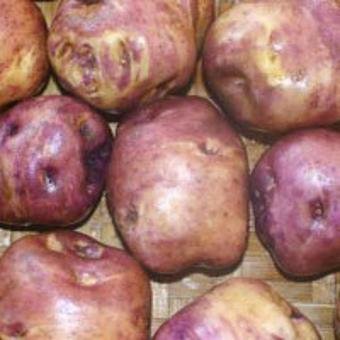
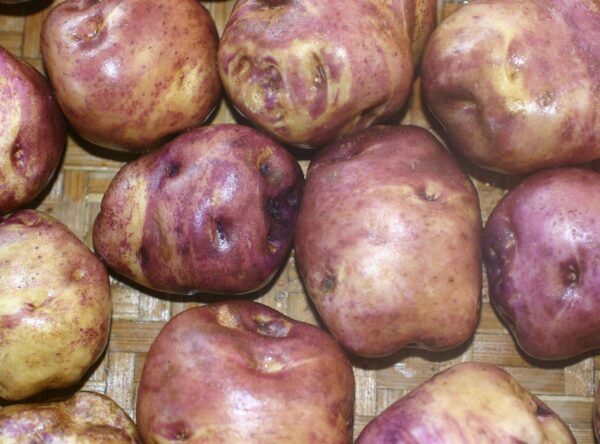
Description: These potatoes came to us from a relative of Bob’s who lived at Whataroa on the West Coast where ships came in from the Chatham Islands in the days of the whalers and sealers, and potatoes being grown commercially on the Chatham Islands (Rekohu) and shipped around the Pacific. This was one of the cultivars that was grown. It is the same potato as the one called Chatham Island, but we have kept them separate because Whataroa has now been grown here for many years and Chatham Island potatoes came from the Chathams recently. They were apparently a quite large, irregular, round to oblong shaped potato with a light purple and cream blotchy skin and yellow waxy, firm flesh with purple streaks throughout. Great for making oven-baked chips or steamed or in a hangi. A heavy cropper and a good keeper.

Planting Instructions: Traditionally potatoes are frost tender so plant after the last frost in early spring. Before planting ‘chit’ or sprout the potatoes. Chitting is the process of placing seed potatoes in a cool, but frost free, light but shady place to encourage strong sturdy shoots to grow before they are planted in the ground. They can be hung up in onion sacks in a dry but light, shady place under eaves or in a garage or shed to store them and then they can be laid out in a tray (egg cartons are useful) to sprout, again in a light but shady place. The aim is to have a small number of shoots, not masses of sprouts. If the shoots are very long they can still be successful but are harder to plant without damage so short, sturdy shoots are best. If you have too many shoots you can rub some off.

Psyllid hit our potatoes and tomatoes here at Koanga a few years ago but we do not have any problem these days. We believe it is because we have built our soil health pretty high, and the crops have BRIX’s over 12. If you do however still have psyllid in your area then the Koanga sells Psyllid Solution, a very finely ground form of diatomaceous earth which if applied regularly using a backpack sprayer (weekly) is very effective at keeping the psyllid off the tomatoes and potatoes and peppers. Koanga diatomaceous earth can also be used as a miticide on poultry and for many other uses. Early varieties of potatoes are usually ready to harvest before the psyllid hits. If you water your potatoes in with BIOBREW solution that will help maintain soil and plant health.